What is Gwent?
Gwent
(a.k.a Gwynt)
used to be a minigame in the video game
The Witcher 3
developed by CD Project.
It was designed to be a collection card game in which you could play your cards against the computer.
You would start with a basic starting deck which you could improve in parallel of the game story and quests by buying more cards here and there or by defeating characters in the game.
It was never designed to be a balanced game. NPCs don't complain, so the idea was to build a deck with all the strongest cards possible to try to always win.
Adapting Gwent to be multiplayer is consequently not an easy task. Furthermore, the game could grow boring because there are obvious optimal decks and optimal ways to play the game.
Players would usually do the same things over and over.
Fortunately, it does not stop the game from being very interesting and full of potential, which is why we wanted to push it even further, especially with a vast universe like The Witcher.
But how does it play?
Gwent is played with 2 players. They start with the same number of cards and take turns to play these cards one by one until both players pass or are out of cards.
At the end of each round the strength of each player's cards is summed to calculate their score. The player with the highest score wins the round.
First player to win two rounds wins the game.
Gwent is sometimes compared to poker because bluff plays an important role.
Usually you want to win a round with as few cards as possible but since each player can lose a round, you might want to convince your opponent you are trying to win the round and push him/her to play more of his/her best cards, while saving yours.
Cards are a limited resource in the game, so winning requires to make a better use of them.
Board layout
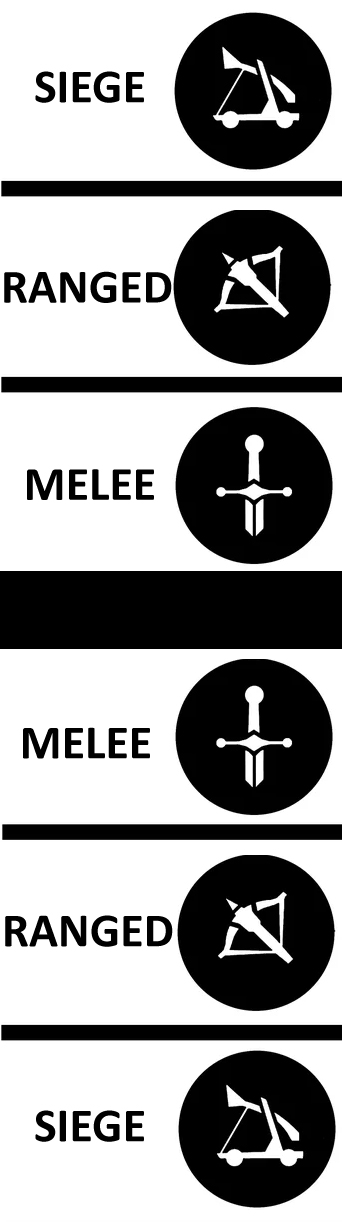
In Gwent, the board is a battlefied divided in two parts, the side of each player.
Each side is made of three distinct rows:
- Melee (or Close Combat)
- Ranged
- Siege
Most cards can be played in only one of these rows. Some special cards can affect only one row at a time.
Concentrating cards in a row or on the contrary spreading them across your side of the battlefield will be important strategic decisions.
This division of the board in three rows and the effects which can apply to them are an important factor in the specificity and elegance of Gwent.
For many players, this is a crucial part missing in the more recent standalone official Gwent game.
So, what are these cards?
In Gwent, there are 3 major kinds of cards:
- Leader cards
- Unit cards
- Special cards
Leader cards
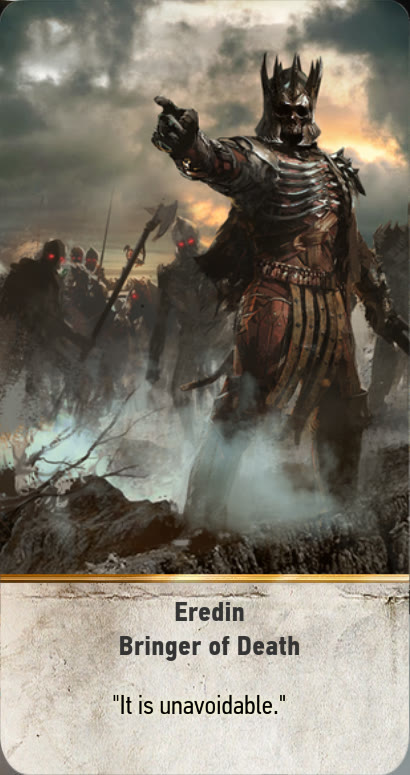
Each player has one and only one leader card, which is chosen before the start of the game. It is not part of the deck.
This card is not played on the battlefield, it remains face up on the side until the end.
It does not have a strength value but it has a strong ability which can affect the board and cards.
Unit cards
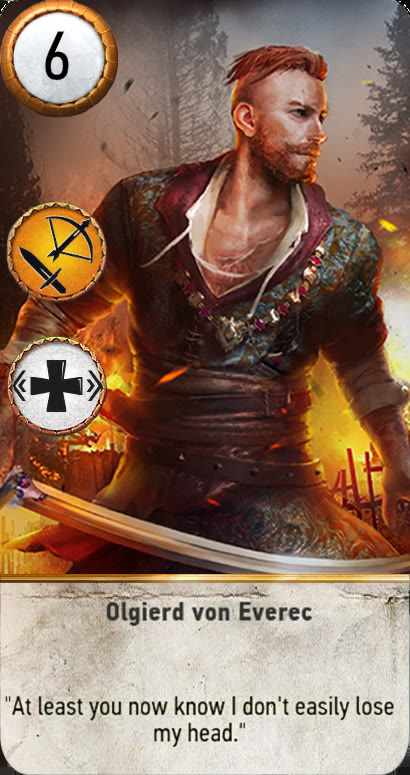
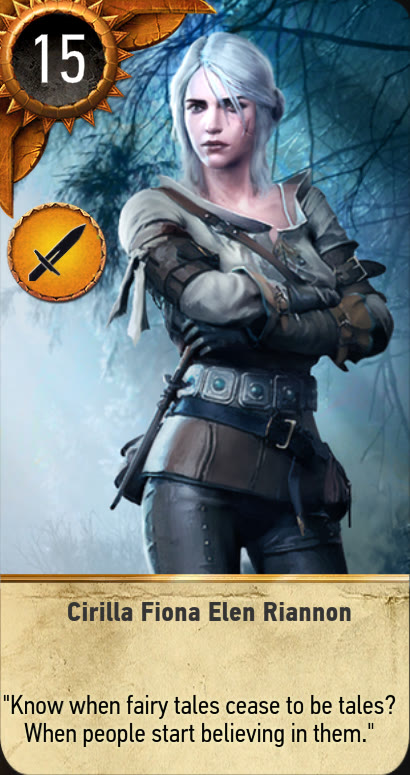
This is the main category of cards, these are the ones with a strength value and which allow to increase the player's score in the round.
Some units have an ability (some even have two), allowing them to affect the board or combine with other cards in order to further increase (or decrease) the scores of players.
These abilities allow to increase the strength of some of your units, summon more cards or remove some other cards from the boad.
Unit abilities is most likely the most important part of the game because it is what brings variety and unpredictability, forcing players to read the opponent strategy and style and react to it approprietly.
A small portion of these units are
Hero
units, their visual is slightly different than the others. Hero units are not affected by any ability, yours or the opponents.
This means that these cards cannot be removed before the end of the round and their strength cannot be changed. Exceptions to this rule are very very rare.
Unit cards can usually be played in only one of the three rows, which is indicated on the card. Some can be placed in one of two rows.
Special cards
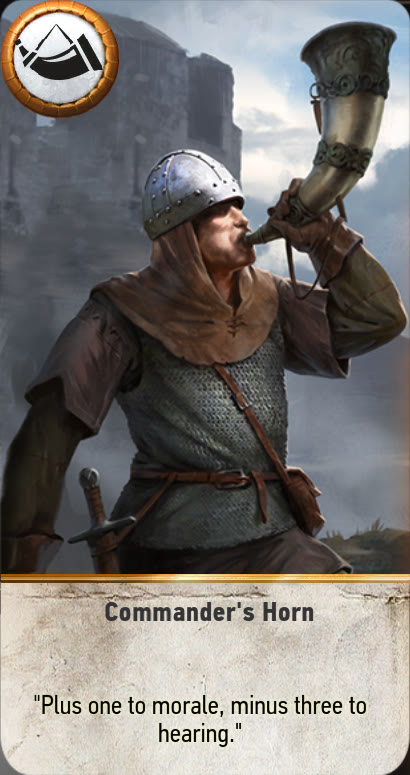
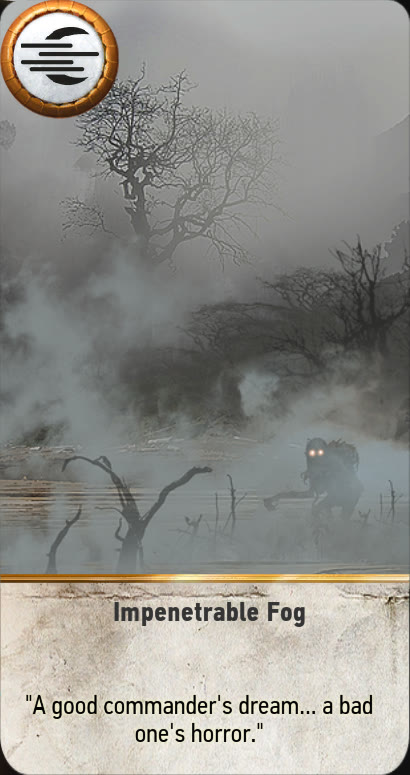
Special cards have no strength but have a powerfull ability which can have a significant effect on the board. They usually either affect a specific or the entire board.
Some special cards have a direct effect and are discarded right after use.
Some provide a durable effect on a row until the end of the round or before another ability removes it. These cards are not played on the battlefield but in a dedicated slot on its side.
A category of these special cards is worth a specific mention, they are called
Weather Cards.
These cards apply a malus in a specific row but for both players at the same time (all unit cards strength is lowered to 1).
They are a powerfull tool which can change the course of a game. Fortunately, there is one special cards allowing to cancel these weather effects, when you have one in your, that is.
These cards play an important role in the strategy of Gwent and in its elegance. They are simple but deadly, it is crucial to anticipate the possibility of the opponent playing them.
How to read the cards
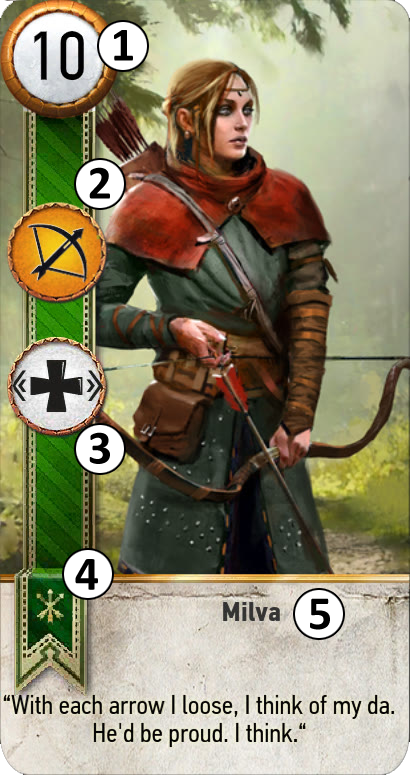
- 1: Strength of the cards to contributes to the player score. What initially on the card is considered the "base strength", since the strength of unit cards can be increased/decreased by other cards. Special cards will have their ability indicated here, instead of the strength.
- 2: Card's row. This icon indicate to which row(s) the card can be placed. Sword means Melee row, Bow means Ranged row and Catapult means Siege row. In some cases, the icon while contain 2 elements, indicating that the card can be placed in several rows, at choice.
- 3: Card's ability, when the card has one. Sometimes a card will have two abilities, the second will similarly be placed bellow this position. Abilities will be explained elsewhere.
- 4: The icon and the coloured ribbon are an indication of the faction the card is part of. Factions will be explained later. If there is no such icon/ribbon, this means the card is neutral and compatible with all factions.
- 5: Name of the card. Most cards also have a custom quote bellow the name, which relates to the character/unit/effect.
Abilities
This card game revolves a lot around a set of abilities, they allow to develop strategies and adapt/react to the opponent's.
The beauty of Gwent is that the number of abilities remains rather low and easy to grasp.
Unlike the official modern Gwent game where each card has a unique effect, the original Gwent has multiple cards having the same ability.
Consequently, it is much easier to understand what a card does (a quick look at the card is usually enough) and what a deck can do.
Abilities available
Original game


This ability is quite simple, it destroys (removes from the board and sends to the graveyard/discard pile) all the unit cards (not heroes) having the highest strength.
It affects the entire board, for both players, so it means you can destroy your own cards.
It is best used when the opponent has several units with the same value (and no other units on the board is stronger) or when a single unit represents a big part of the total strength of the player.
Note that when using this ability from a card, the card is excluded from the effect, it cannot destroy itself and it doesn't count in what the strongest units are.

This ability is a row-specific variation of Scorch. Instead of affecting the entire board for both players, it targets one of the opponent's rows.
If the total strength present in that row is 10 or higher (heroes included), it destroys the strongest non-hero units of that row.
There are three variants of this ability: one for each combat row.
Originally only the Melee variant existed, but Ranged and Siege versions have been added so each faction's leaders and specials can pressure the row that best fits their play style.

When a card with the Muster ability is played on the board, it summons as well all the other cards in your deck and hand with the same name.
In reality, they do not always have the same name but they share a common element which is easily distinguishable.
The power of this ability resides in the fact it can quickly add several cards to the board and increase your total score.
Its weakness is that the cards often have the same strength and can consequently be destroyed all at the same time if not played carefully.
Also, keep in mind that if you have several Muster cards of the same familly in hand, playing one of them will play all the copies in hand, putting you at a disadvantage.

In a way, the Tight Bond ability behaves similarly to the Muster ability. These cards are part of a "familly" and are stronger together.
For each card of the same familly (same or similar name) with the Tight Bond ability, the base strength of the card is multiplied by the number of copies in the same row.
So if you have managed to play 3 copies, each card will have its value tripled. All combined, the total will be 9 times higher than without the ability.
The power of this ability is that you can reach a very high strength on the row, so high that it will be very difficult for your opponent to match it (with 3 cards you have the strength of 9 cards).
However, this very strength is also its main weakness. Since these cards are copies, they share the same strength and tend to be the strongest cards on the board, easy target for Scorch.
Also, a single copy of such a card isn't very strong, the most important part is managing to gather several copies.

Now let's get into row boosting. Morale boost increases the base strength of all units of the row by 1, except on itself. It is obviously more effective if you have many units concentrated in the same row.


A stronger boost now. Commander' Horn doubles the strength of all units (not heroes then) in the row. It applies last, so it combines well with other boosts.
Here as well, it is more effective in a row with many cards, but the number of cards isn't has important as for Morale Boost. A couple Tight Bond cards might have a larger boost potential than 5 weak cards.
While this ability hold a huge potential, it also makes yourself very vulnerable to Scorch.
When this ability is played through a unit, the unit does not boost itself.
Also, only one Commander' Horn can be effective at the same time in a row. If several cards in the row have it, it will aply only once.

When a card is removed from the board (destroyed or at the end of a round), it goes into the graveyard (aka discard pile).
The Medic ability allows to restore a unit card (not a hero) from the grave.
When a card is restored on the board, its abilities apply again.
This ability is very powerfull because it effectively gives you an additional card on the long term. It also allows you to use again some important abilities, which can be very decisive.
This card is like wine, it gets better with time. The later you play it, the more options of cards you have. If your graveyard is empty, this ability isn't very useful.
A medic can even restore another medic, allowing you to restore yet another card.

Probably the most infamous ability of the game. We said earlier that cards are the most important resource of the game and that's the aim of this ability, give you a card advantage over your opponent.
When this card is played, it goes on your opponent's side of the board and will contribute to their total score.
In return, two random cards are drawn from your deck — one shown face up, the other face down. You pick one to keep in your hand; the other is shuffled back into your deck.
Net effect: you traded one card from your hand for one new card from your deck, and your opponent gained the spy's strength for the current round.
This rework (the “draw 2, keep 1” variant) replaces the original “draw 2, keep both” behavior, which tilted the game too heavily in favor of spy-stacking decks. The face-down pick still lets the player gamble for the unseen card, preserving the bluff feel.
Be careful — once on the opponent's side, the spy is under their control and they can play it back against you.


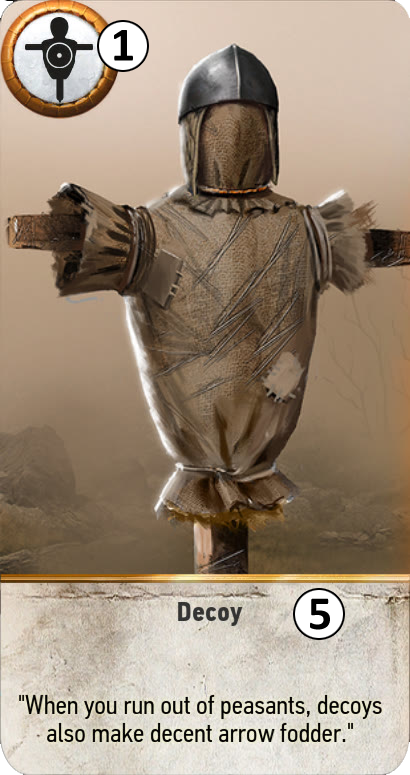
This ability is often summarized as the counter to spies. It allows to swap one unit on the board with this card (in other words, take the targert card back into your hand).
The Decoy ability has many advantages. Obviously, this is a great counter to spies, because you can restore the balance by playing the spy back and draw cards as well.
But it can also be used on other cards with important abilities, such as Scorch or Medic.
Also, keep in mind that effectively when you play a Decoy, it is almost like skipping a round because your hand size does not reduce, this is often underestimated.

An Agile unit can be placed in either the Melee or the Ranged row when you play it. Once placed, it stays on that row for the rest of the round.
The value of Agile is the choice it gives you at play time — you can drop the card into whichever row is currently safer from weather, has the Commander's Horn slot still free, or is short on bodies for a Tight Bond or Inspire combo.

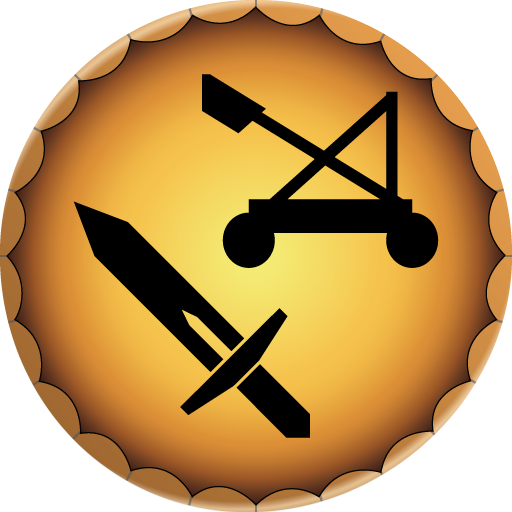
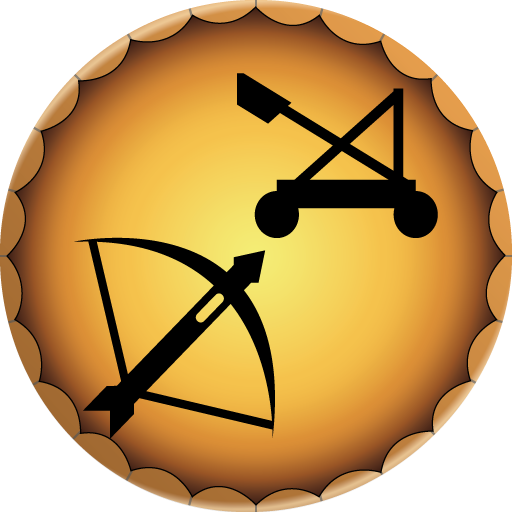

The fork extends classic Agile (Close / Ranged) with two more two-row variants and one fully flexible three-row variant:
- Agile (Close / Siege) — choose Melee or Siege at play time.
- Agile (Ranged / Siege) — choose Ranged or Siege at play time.
- Mobile — choose any of the three combat rows at play time. Leader cards, once activated and placed on the board, are always Mobile.
The row icon on a multi-row card shows the rows you can pick from. Like classic Agile, the choice happens once: you cannot move the card between rows after it lands.

A bit like Medic, the Summon Avenger ability takes longer to show its effects.
When a card with this ability is removed from the board (either destroyed or at the end of the round), it is replaced by another more powerful card.
More often than not, this other card will enter battle at the begining of the next round.
Usually a unit with the Summon Avenger will be very weak. Playing it is like investing on the future because it will allow yourself to start the next round with an advantage (provided the card wasn't destroyed before the end of the round).
This ability combines very well with Medic.
Note that if the card that should be summoned is in your hand or deck, it will be taken from there. Otherwise, it will be "created" but it will not go into your graveyard when removed.


These two abilities need to be presented together. They are specific to the Skellige faction.
Unit cards with the Berserker ability can be transformed into their more savage form when a card with the Mardroeme ability is played in their row.
Berserker units are initially not very strong, and thus not very interesting if not combined with Mardroeme.
However, their transformed versions are very strong but also very vulnerable to scorch.
Using this ability well isn't easy.
Original game - Weather cards
Like mentioned earlier, Weather Cards are a more specific kind of special cards (and thus special amongst abilities).
Their effect is more global and will affect both players. In some rare cases, a unit card might have a weather ability, but these are exceptions.
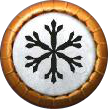
Reduce the base strength of all units in the Melee row (not heroes) to 1, for both players. This applies before any other ability/effect.

Reduce the base strength of all units in the Ranged row (not heroes) to 1, for both players. This applies before any other ability/effect.
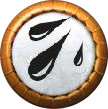
Reduce the base strength of all units in the Siege row (not heroes) to 1, for both players. This applies before any other ability/effect.
Reduce the base strength of all units in both the Ranged and Siege rows (not heroes) to 1, for both players. This applies before any other ability/effect.

Remove all other weather effects currently effective on the board, this applies to all players.
New custom abilities
To extend the game with more cards and factions, additional abilities have been added. Otherwise most decks would look and play similarly.
This might make the game a little more complex, since there are more concepts to assimilate, but these abilities have been designed to keep the spirit of the original game and remain simple.


Like the name suggest, the Slaughter of Cintra ability applies to some Cintrian units. Some units have this ability, they are marked for slaugther.
When the corresponding special card is played, all of your cards on the board being marked (having the ability) are destroyed and move to the discard pile.
In return, you draw a card from the deck for each of the removed cards. This gives you a potential card advantage.
The trick is that you are not forced to use the special ability, the marked units can stay on the board and you can keep their strength for your total score.
So your opponent does not know whether you are planning to throw the round for card advantage or if you will keep the units.

Toussaint Wine ability is like the cross of a Commander's Horn and Morale Boost. The ability will be played and stay on a row and boost all unit cards (not heroes) by 2 (instead of 1 like Morale Boost).
Bank ability is quite simple. You play it and you draw a card from your deck. No complication.
It is a little like skipping a round (you keep the same number of cards in your hand), except you do not know with which card you'll end up.
This ability is actually shared by several special cards. This card is played in one of the opponent's row.
If he/she plays a unit card (not a hero) in that row and that the units has an ability, the card will be locked and this special card will go to the graveyard.
A locked card cannot use its ability until it is removed from the board.
This ability requires a good understanding of the opponent deck and anticipation of the cards it can have.
It is very powerfull at preventing Muster and Tight Bond from working as intended.
Be careful though not to play your spy in this row while a lock is pending.

This ability is quite straight-forward. It is played in either the enemy Melee or Ranged row. All unit cards (not heroes) are moved 1 row backward towards the Siege row.
The purpose of this ability is mostly to break some effective row bonuses (like a Commander's Horn) or to push units into bad weather.

When using this ability, you will take control of the units with the lower strength in the enemy Melee row. If there are several, take all.
This ability can be very strong on Muster units or when the enemy Melee row is under bad weather. Be careful though that the timing is key.
Good targets this round might not be available next round because the opponent will have played a weaker card.
This ability protects an entire row from all abilities of the opponent, except weather, until the end of the round.
The main purpose is to protect the row from Scorch. Note that consequently cards in this row do not count in the definition of the highest strength on the board.

This ability is the mirror effect of Scorch Combat, it destroys the weakest units (not heroes) in the opposite row this card is playing on.
It is a very powerfull counter to Muster.


This Witcher School ability is actually 5 identical abilities.
There is one variation of the ability for each Witcher School (Wolf, Viper, Cat, Bear and Griffin).
When there is more than one unit card of a same Witcher School, boost all of these by 2 for each other members of the school (e.g. there are 3 cards of the School of the Wolf, boost all units by 4).
This ability seems difficult to exploit, but it works in combination with another ability.

If at the end of the round you have a card with the Resilience ability on the board and that it shares a second ability with another card on the board, keep the card with Resilience on the board for the next round.
For now, cards with the Resilience ability are Witchers Keeps. They stay on the board if a witcher of the corresponding school was also here.
This card will also contribute to boost witchers of the same school.


Whorshipped units are boosted by the amount of Whorshipper units on the board.
This ability requires to combine two type of cards for a powerful result.
Medic units can help to prolongate this combo into later rounds.
Be careful that it exposes a lot Whorshipped units to scorch.

All units with Inspire ability take the highest base strength of the Inspire units on your side of the board. Still affected by weather.
Basically, if you have several units on the board with the Inspire ability, they will align to the highest base strength among them (base strength, meaning before any effect, positive or negative).
Consequently playing late a stronger Inspire unit will boost all others on the board, which can bring an unpleasant and unnexpected surprise to the opponent.
Be aware though that since all Inspire units will have the same strength (prior to effects), they are vulnerable to scorch and can all be destroyed at the same time.
Providing a boost to some of them can help remediate this effect.

Choose Biting Frost, Impenetrable Fog, Torrential Rain, or Clear Weather from your deck and play it from there.
Picking Clear Weather just clears every active weather effect on the board with no second choice.
This is the toolkit version of weather — instead of locking your deck into a single forecast, you decide at play time which row to punish (or which row to save).

A more surgical Witch Hunt: when played, destroys a single weakest non-hero unit on the opposite row. Heroes and shielded rows are untouched.
This ability is good against decks that lean on a single fragile body — a lone spy, an avenger token, a Muster trigger — without sweeping the whole row.
Play a unit from your hand to the board, then draw a random card from your deck. The unit you played still applies all its normal abilities on placement.
Effectively a free tempo card — you fill the board and your hand size stays the same. The catch is that the draw is random, so you can't fish for a specific combo piece.


Draw 2 (or 3) random cards from your deck into your hand, then send 2 (or 3) cards of your choice from your hand to your graveyard.
These cards thin your deck, dig for combo pieces, and load up your graveyard for Medics, Avengers, and Skellige's third-round revive — all in one play. The flip side is that you can't lose hand size by playing them, so they don't help you when you need to stretch fewer cards over more rounds.
Target one of your own non-hero units already on the board; that unit is moved to your graveyard and this card takes its place on the same row.
Sacrifice is the workhorse setup tool: stuff your graveyard with high-value medic targets, trigger Summon Avenger on the sacrificed unit, or simply replace a row-1 vulnerability with something stronger.

Seize a random unit with the lowest strength from the opponent's opposite row, and place it on your side in the row this card was played to.
Like the universal Seize special, but bound to a unit on the board (and targeted by the row you place it on). Be aware: the seized unit comes over without retriggering its placed abilities.

A family of graveyard manipulation abilities. They generally let you pick units from a graveyard and shuffle them back into a deck — either denying the opponent a medic target, or recycling your own resources for another round.
Specific cards vary: Philippa Eilhart, for example, offers a choice between “send 2 from the opponent's graveyard back to their deck” (a cleaner reset) or “move 2 from the opponent's graveyard into yours” (sets up your own medics on their fallen units). Other “Highest Back to Deck” variants return the strongest non-hero from the board to its owner's deck.


Reveal permanently exposes 1 or 3 random cards in your opponent's hand — both players can see them for the rest of the game.
Unreveal hides up to 3 of your revealed cards back, and any unused effect "absorbs" your opponent's next reveal attempts before they hit.
Reveal cracks open the bluff layer Gwent is built on — once you can see what's coming, you stop guessing whether the opponent is committing to the round or throwing it. Unreveal exists so the bluff layer can fight back.
When played, you choose up to 2 of your own units anywhere on your side of the board and move them onto the row this card was placed on.
Used for stacking a row to maximize Commander's Horn or Tight Bond, or for evacuating units out of a freshly dropped weather row before it bites.

Target any unit on the board — yours or your opponent's, hero or non-hero — and banish it. The banished card does not go to the graveyard; it leaves the game entirely. A 3-strength Jade Figurine hero takes its place on the same row, owned by whoever played this card.
Banishment matters: a Jaded-out hero can't be brought back with Medic, and the opponent loses a target for their own Succubus / Seize / Resurrect plays. It's one of the few abilities that can permanently remove a hero from the game.
Factions
The Witcher universe is vast, so to bring more variety and fun to the game, it is divided into several factions.
Factions usually represent a realm or a group/faction of people. Each faction has its own set of cards along with a faction ability, and thus its own playstyle.
A faction ability, often passive (triggered at a specific moment of the game) but sometimes active as well (used at the discretion of the player), will have a significant influence on the way to play the game because you need to adapt to it to make the best of it.
Before to start the game, a player must chose the faction to play, which will define the set of leaders and units that can be used to build the deck.
Some unit and special cards are
Neutral,
this means that they can be played in any faction.
Factions available
Original game
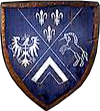
Faction Ability:
Draw a card from your deck when you win a round.
This faction relies mostly on Tight Bond units, along with Spies and Siege units.
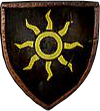
Faction Ability:
If a round ends in a draw, Nilfgaard wins the round.
This faction relies mostly on Tight Bond units, Spies, Medics and Strong cards.
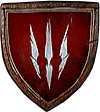
Faction Ability:
At the end of each round, a random unit card stays on the board.
This faction relies heavily on the Muster ability, it can quickly swarm the board.
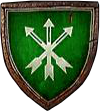
Faction Ability:
Before the game starts, this faction decides who plays first.
This faction relies mostly on Muster and Medic units and some Morale Boost.
Faction Ability:
On the third round, restores two random unit cards from the graveyard.
This faction has a balance of Tight Bond, Muster and Medic, but its specificity is the Berserker/Mardroeme combo.
Custom new factions
Faction Ability:
Once per round, the player can skip a round.
This faction has a variety of cards of all kinds, but its specificity is the witchers and their corresponding abilities and signs.
Faction Ability:
Draw a card from your deck whenever you lose a round.
This faction has a balance of Tight Bond, Muster and Scorch units and many strong cards.
Faction Ability:
Once per game, apply a Morale Boost to a row of your choice.
This faction relies mostly on Muster and Medic cards but also has the specificity of having decoy units and shield special cards.
Faction Ability:
Start the game with the hero Sigi Reuven on the board.
This faction relies mostly on Spies, Muster and Tight Bond units but also has the specificity of having the Bank special card and some Witch Hunt units.
Faction Ability:
Restore a unit card of your choice whenever you lose a round.
This faction brings in some new abilities. On one side the dragon cult has the combination of Whorshippers and Whorshipped units.
On the other side, Free Warriors have the Inspire ability, allowing them to have the strength of the strongest of them on board.
Faction Ability:
None — this is not a competitive faction.
When the Spheres collided, every card from every realm tumbled into a single deck. Pick this faction in the deck builder to get access to every leader and every card in one match, regardless of original faction.
Built for testing combos and trying abilities you wouldn't normally pair. Treat it as a toy box, not a balanced opponent.
Setup
Building your deck
To play, each player must chose a faction, a leader and select or prepare a deck of the selected faction.
We have prepared a selection of decks which we think are interesting to play and reasonably balanced.
However, you can constitute your own, the only rules are the following:
- Minumum 22 unit cards (heroes included) from the selected faction or neutral cards.
- Maximum 10 special cards
Tips:
- The more cards you have in your deck, the less likely you are to draw the best cards and make the combos work. Chose wisely, here less is more.
- Hero cards might look powerfull at first, but in the end they are boring and are not the cards that win games because most of them have a limited impact. Consequently, don't take too many of those.
- Looking to invent your own cards or replace card art? Open the Card Builder — every override is stored locally in your browser and used by the game and the deck-customization screen.
- The Deck Manager lets you name, save, and reload custom decks; the in-game deck-customization screen can also upload deck JSON files directly.
Start
A coin toss decides who chooses turn order — not who plays first.
The winner of the toss picks one of two options:
- Play first and redraw up to 5 cards (a generous Mulligan).
- Play second and redraw up to 3 cards (a smaller Mulligan, but the last word in the round).
Each player shuffles their deck, draws 10 cards, performs their redraws, and the 10 cards they're left with are the entire hand they'll have to fight all three rounds.
Tip: a weak opening hand benefits more from the 4-redraw side; a strong opening hand prefers playing second so it can react to the opponent's plays.
Rounds
Players take turns either playing a card or using the active ability of their leader or faction (when available).
A player can instead chose to pass and sit out of the rest of the round (not play any hard), while the other player is free to play more cards.
When both players have passed or cannot play any other card, the round ends. The player with the lowest total strength loses a round and a life point.
Each player starts with 2 life points and thus loses the game when losing 2 rounds.
Note that in case of a draw, both players have the lowest strength and lose a life point. This is not a desirable situation.
The players that wins the round plays first in the next round.
Counting the total score can be really bothersome, good thing that here the computer is doing it for us.
But it remains important to understand how it's done in order to anticipate the changes when playing certain cards.
Here are the principles to count the scores.
For each row:
- Weather effects always apply first, before anything else. They change the base strength of the unit cards.
- Some rare faction/leader abilities also affect the base strength. Weather takes precedence over them, but if no weather effect is active, apply these changes first.
- From this point, consider that the strength is calculated from the most specific ability of the card to the more global effects.
- First we apply the Tight Bond effects.
- Then we apply the various boosts (Morale, Witcher School, Toussaint Wine etc), which simply add up one another, order does not matter.
- Last, always last, we apply the row multipler, being the Commander's Horn.